Skip to content

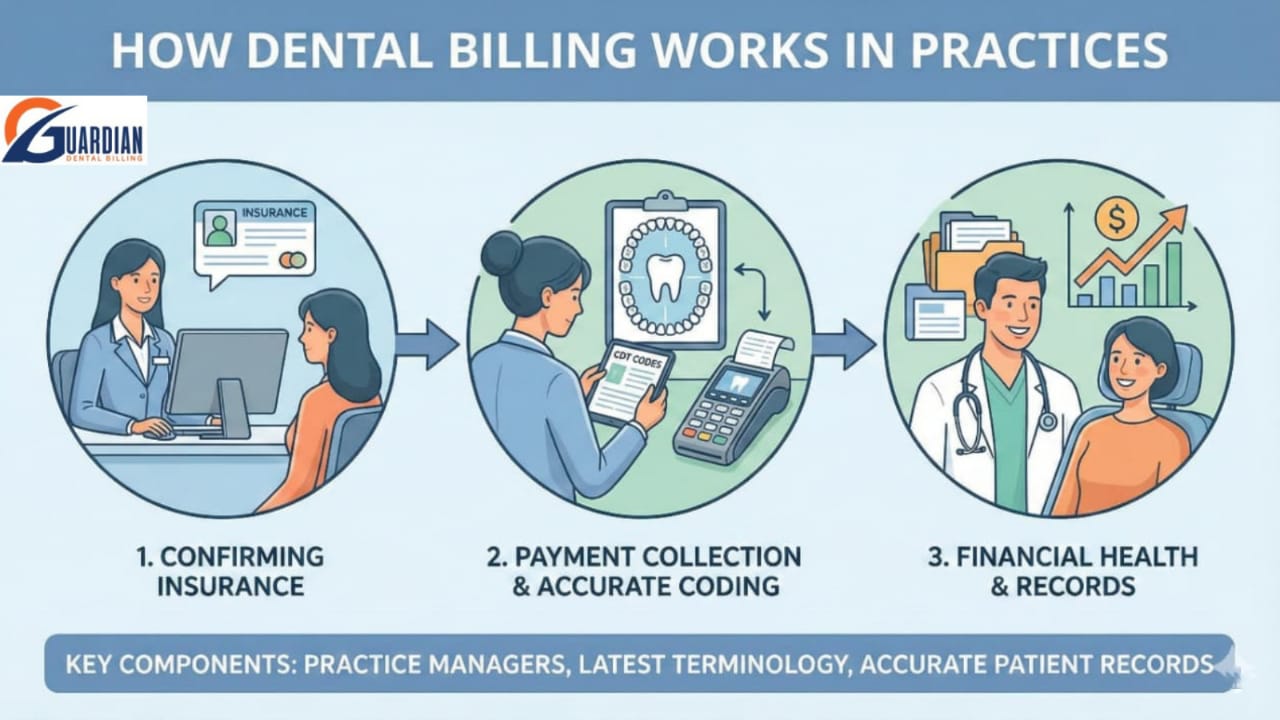
Dental billing is essentially the financial unit of a dental business that enables dental clinics to sustain their financial status by receiving payments from services provided to patients and insurance carriers. In other words, dental billing is quite similar to medical billing; that is, it also includes submitting claims, insurance verification, and payment collection. Nevertheless, the billing workflows and the codes utilized in these two billings are different.
Healthcare billing is based on diagnostic and procedure codes to determine the patient’s portion of the bill as well as the insurance coverage. The claims are issued to the patients or third-party payers that could be health plans, HMOs, PPOs, Medicare, or Medicaid. Medical billers need to convert the doctor’s notes into clear statements with the right coding, whereas dental billers concentrate more on dental procedures.
Related: CPT Codes & Billing For Remote Patient Monitoring
How Dental Billing Works in Practices
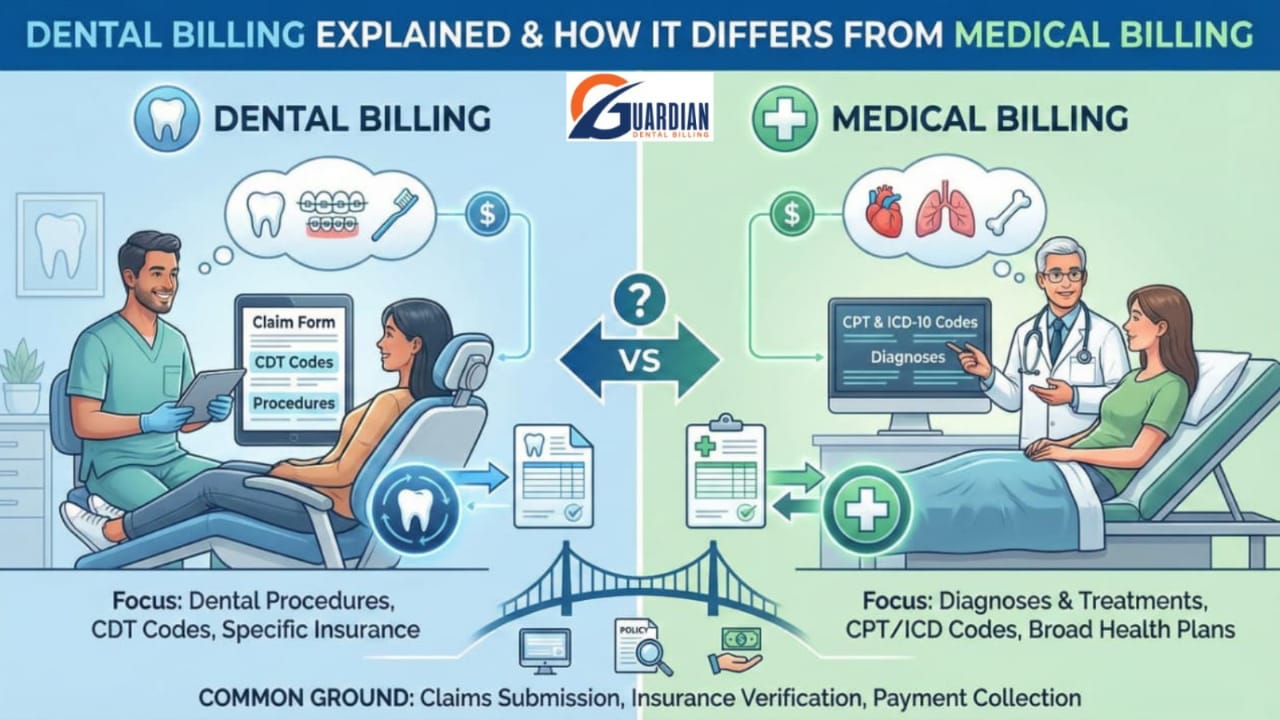
Dental billing is essentially the system that follows the money that is supposed to come back after a dental procedure. The components of the system are:
Confirming insurance with patients Working on payment collection after dental visits, and ensuring that the correct dental codes are used
The business side without dental billing would be very hard. It is a job that requires practice managers and staff to be well-versed in the latest dental terminology (CDT codes), checking insurance coverage, and maintaining accurate patient records.
Related: What Are The Top 10 Denials in Medical Billing?
Integrating Medical Billing in Dental Practices
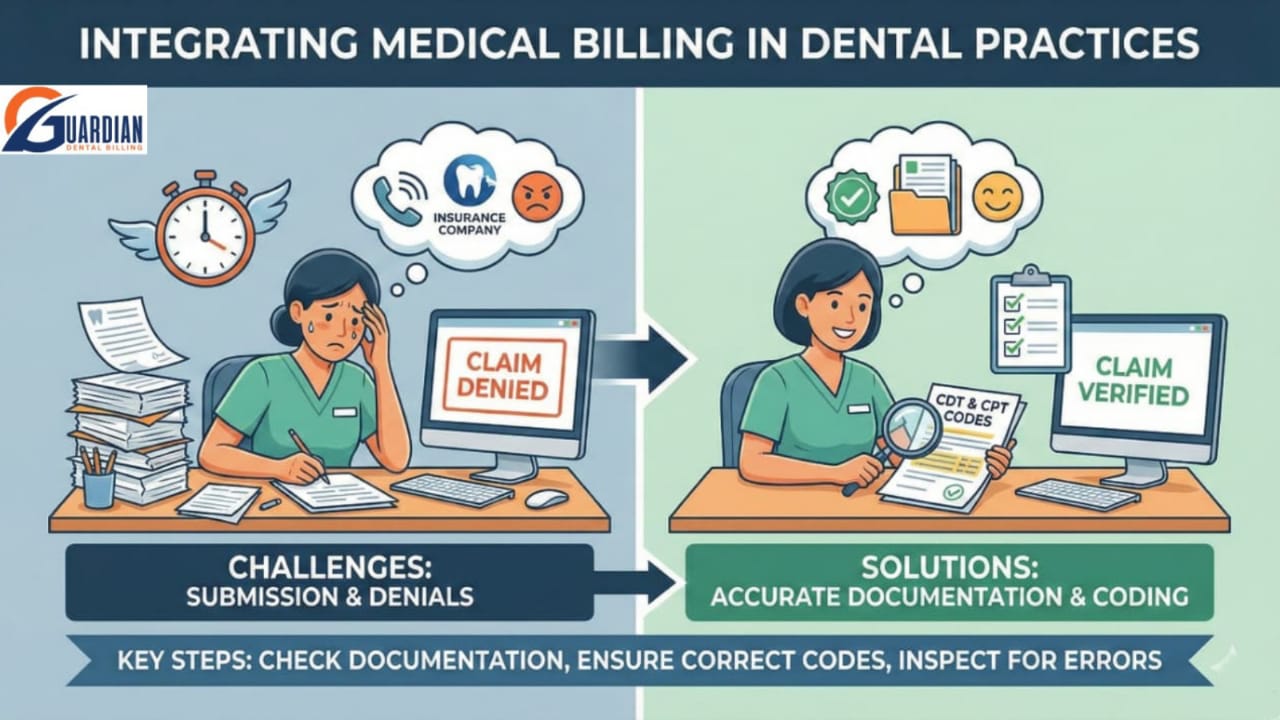
Medical billing can also be implemented in dental offices for those procedures that are covered by medical insurance. The main problems are submitting the claim, talking with insurance companies, and dealing with refusals or delays. The staff can be occupied for several hours with checking documentation and patient demographics in order to have the claims approved.
Before introducing medical billing:
- Check the dental documentation
- Ensure that the codes for medical and dental billing are correct
- Inspect claims to detect errors
Understanding Dental Codes vs Medical Codes
While medical billing generally involves the usage of ICD-9/ICD-10, HCPCS, and CPT codes, dental billing is based on CDT (Current Dental Terminology) codes, which are updated annually by the American Dental Association (ADA).
Essential dental codes are:
D1999 Unspecified Preventive Procedure: It is a code that is used when m PPE (Personal Protective Equipment) costs and other services are documented.
D1330 Oral Hygiene Instructions: The code is used when the preventive guidance is given to patients.
Each CDT code that has a “by report” label means that a detailed explanation is necessary in order to justify the charges. Accurate documentation is a guarantee for receiving the correct payment from dental insurance.
Similarities Between Dental Billing and Medical Billing
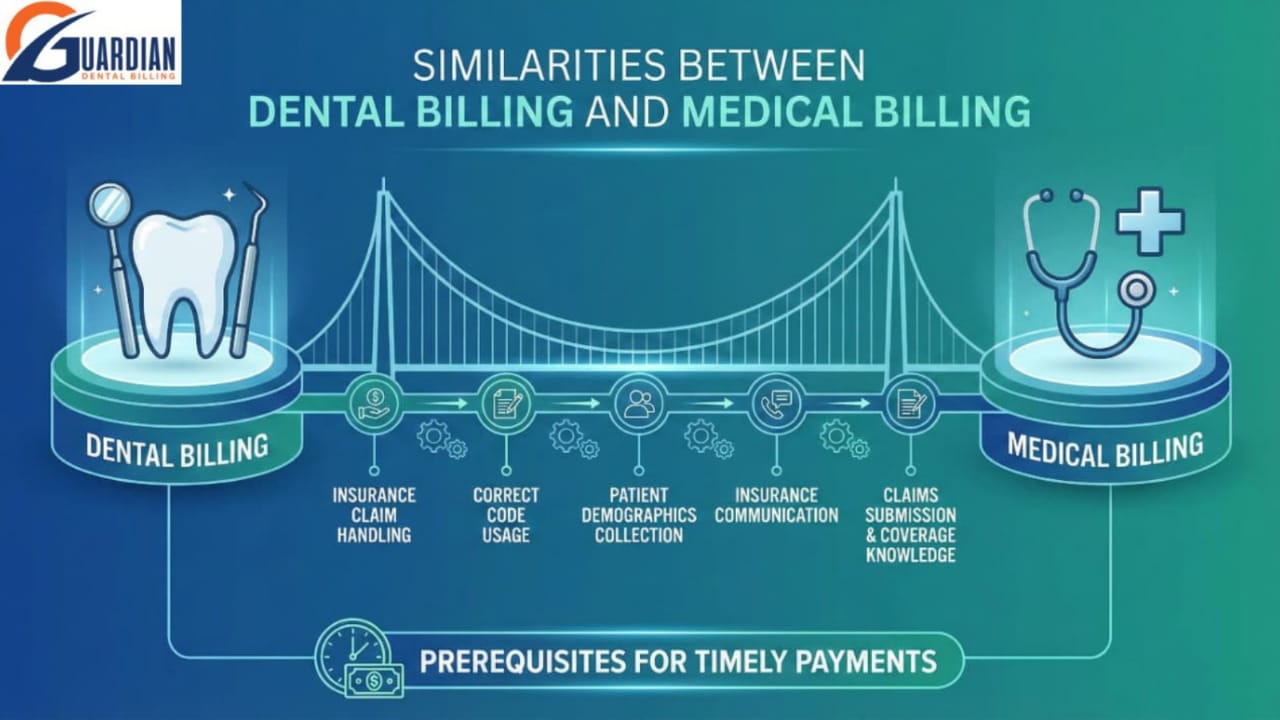
Dental billing and medical billing have several characteristics that are alike in their operations:
- Understanding the manner in which insurance companies deal with claims.
- Using the correct codes for the treatments and procedures.
- Collecting the demographic information of patients.
- Keeping communication with the insurance carriers.
- On top of that, both of them mostly rely on claims submission and knowing the insurance coverage as the main prerequisites for payments to be made on time.
Key Differences Between Dental Billing & Medical Billing
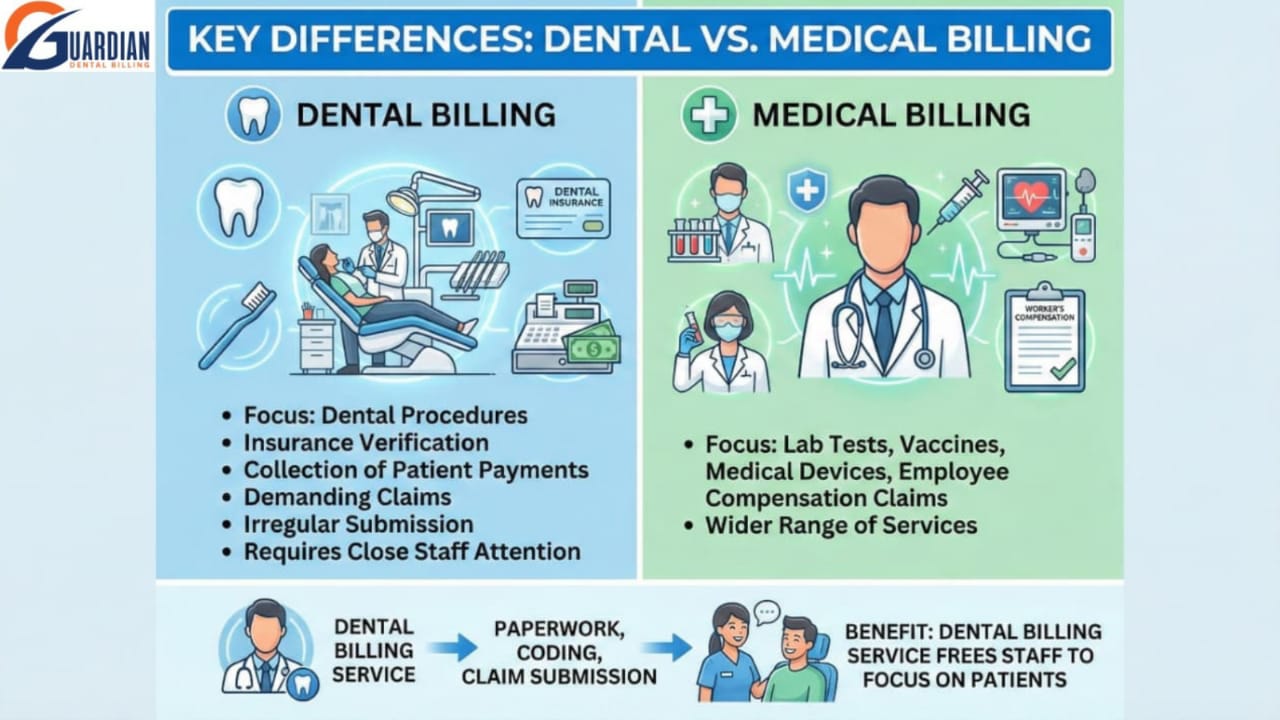
While they are related, dental billing and medical billing have some distinctions: Dental billing is centered around dental procedures, insurance verification, and the collection of patient payments.
On the other hand, medical billing may include items such as lab tests, vaccines, medical devices, and employee compensation claims.
Compared to medical billing, which has a wider range of services, dental claims are frequently more demanding as they require close attention from the staff because of their irregular submission.
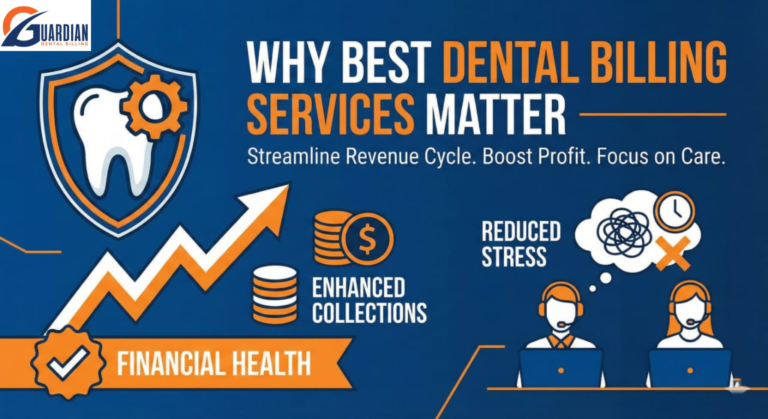
The utilization of a dental billing service is instrumental in terms of the paperwork, coding, and claim submission that are essential parts of the daily routine of the staff thus, they are free to focus on the patients.
Expert Dental Billing & Medical Billing Services
Guardiandentalbilling provides comprehensive dental billing services designed to streamline your practice’s financial operations. Their services include:
- Accurate claim submission to dental insurance providers
- Revenue cycle management to ensure timely reimbursements
- Specialized billing tailored specifically for dental practices
Guardiandentalbilling supports dental practices in handling claims promptly, lowering the administrative workload, and increasing the money coming in the business side of your team.