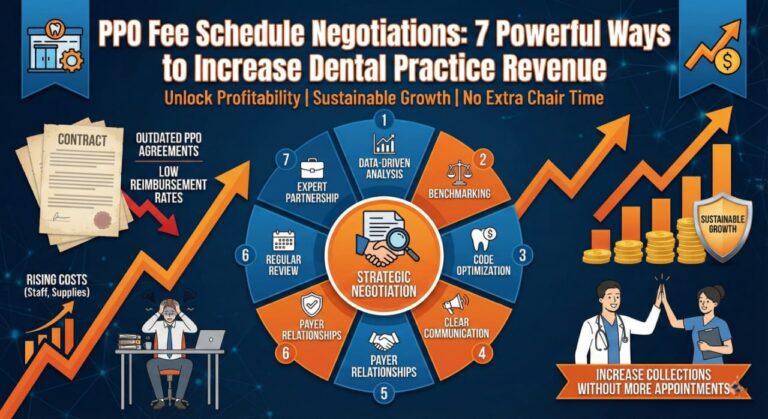
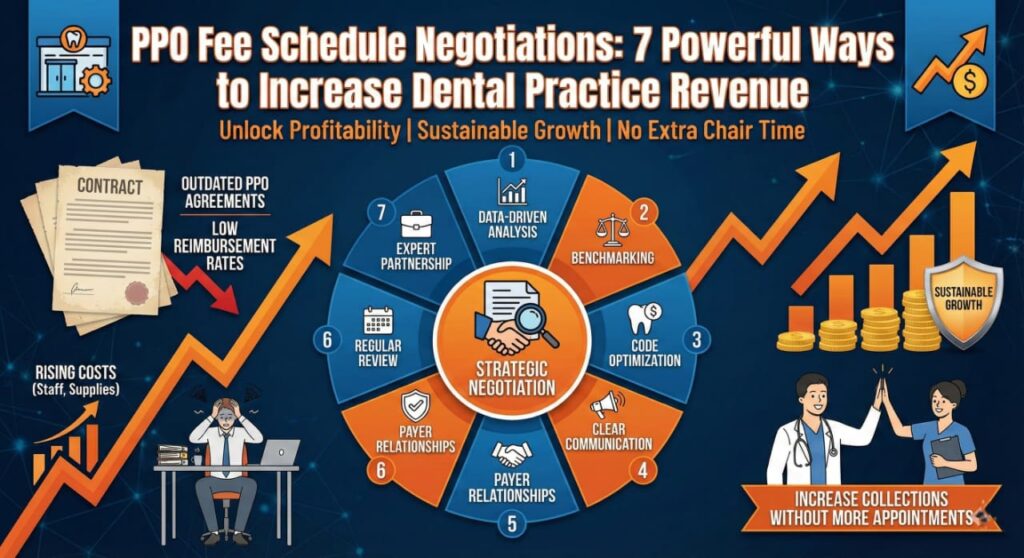
PPO fee schedule negotiations are a great way to raise the profit of a dental practice, but they are very seldom considered. A lot of dental clinics keep on working with the same old PPO agreements that have low rates of reimbursement, although the costs of staffing, supplies, and operations are constantly going up. A dental clinic can raise its collections without making more appointments or lengthening the chair time if it puts a priority on negotiating its PPO fee schedule.
In a dental market that is very competitive, one can hardly decide whether to continue with PPO fee schedule negotiations as they have become necessary for the sustainable growth of a business.
What Are PPO Fee Schedule Negotiations?
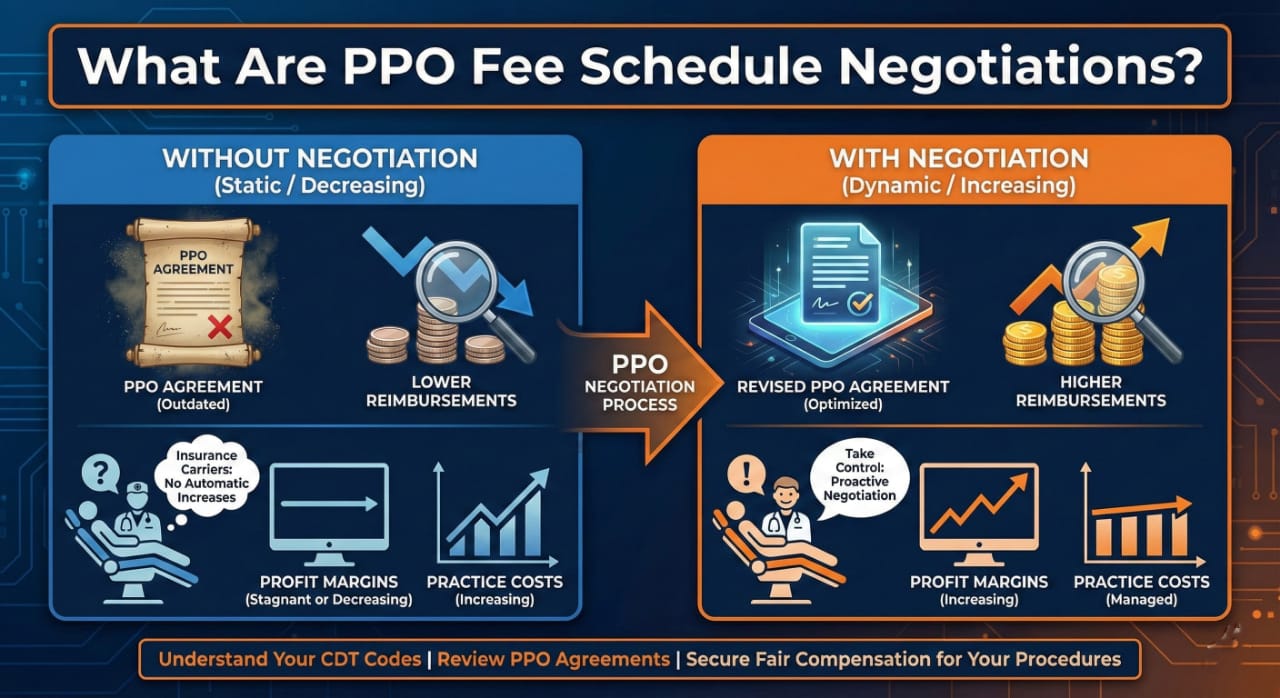
PPO fee schedule negotiations entail going through and changing again the money that is given back to the doctors by the insurance companies for the dental procedures they carry out. These money returns are written in the PPO agreements and they are the main determinants of how much a practice will be paid for each CDT code.
Generally, insurance carriers refrain from raising fees that they pay to providers unless there is a request to do so. Therefore, if you do not start the PPO negotiation process, the profit margins of your practice may be decreasing year after year while your production remains at the same level or increases.
Why PPO Fee Schedule Negotiations Matter More Than Ever
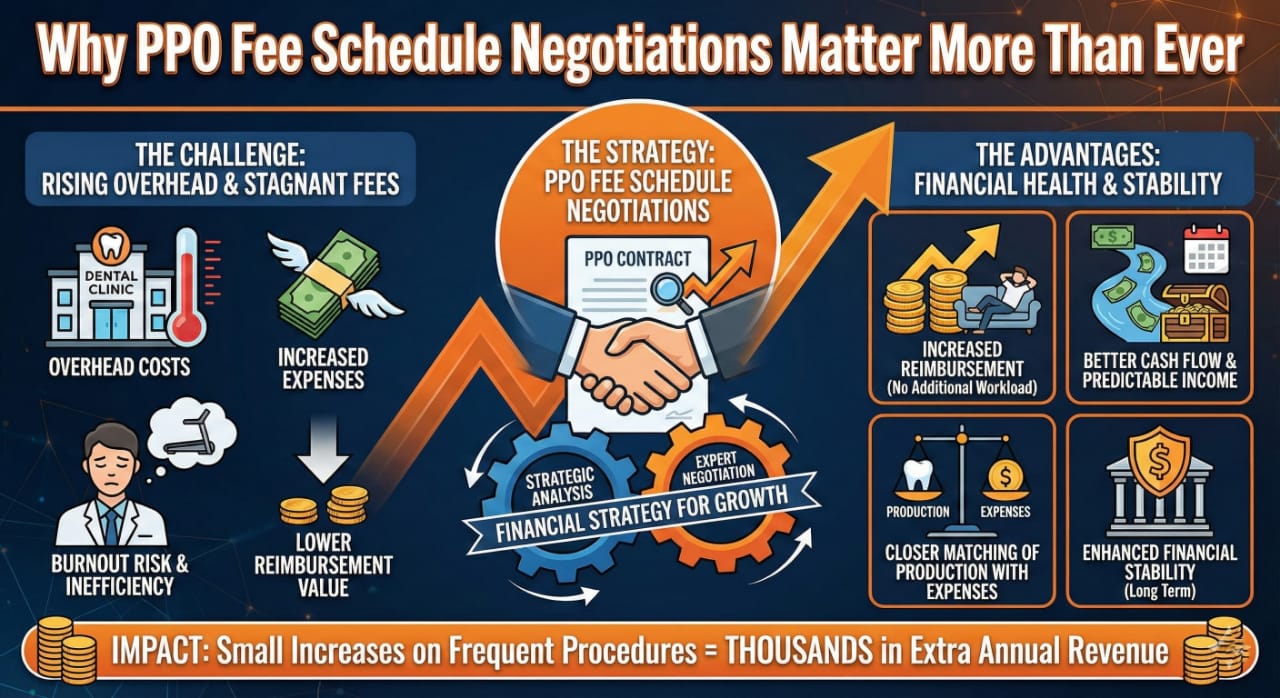
Increasing PPO fee schedule negotiations have turned into a major financial strategy due to the rise of overhead costs. To ensure that the revenue per procedure does not decrease as a result of a higher patient volume which may cause a burnout situation and the practice to become inefficient, simply negotiating better PPO fees is the way to go.
Key advantages include:
- Increased reimbursement with no additional workload
- Better cash flow and more predictable income
- Closer matching of production with expenses
- Enhanced financial stability over the long term
Just a few small increases in the fees of the most frequently billed procedures can lead to several thousands of dollars of extra annual revenue.
PPO Fee Schedule Negotiations: When Should You Start?
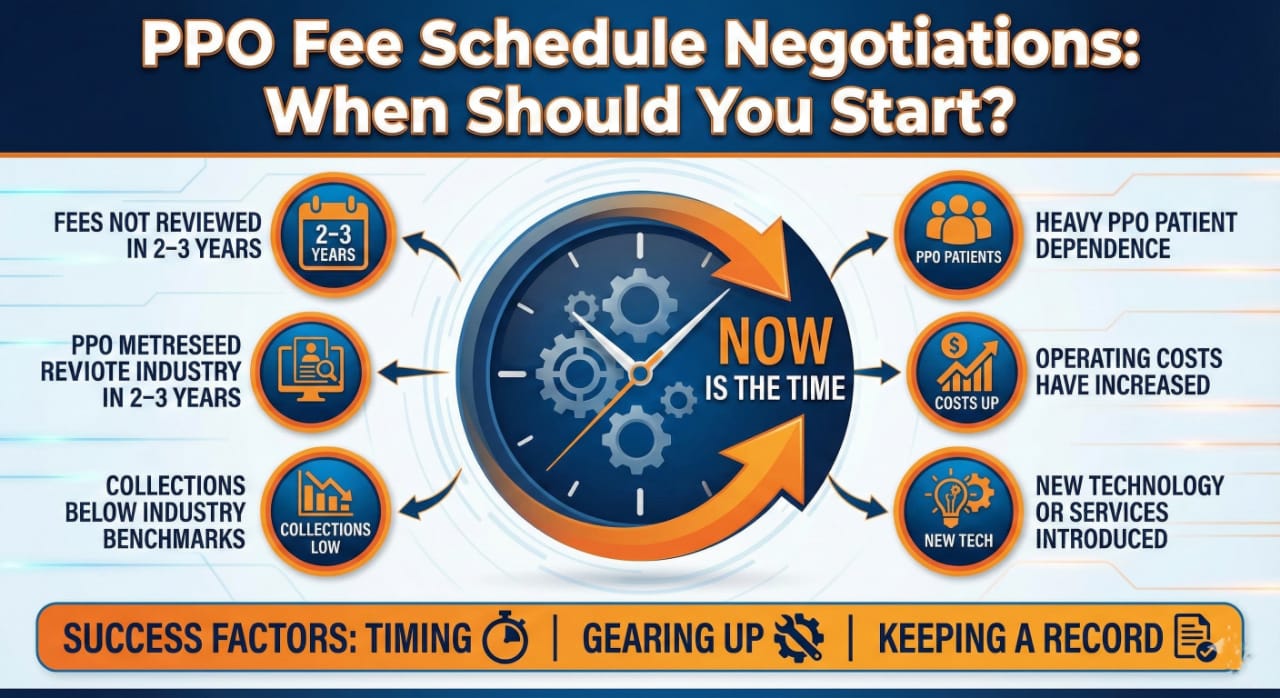
The ideal time to initiate PPO fee schedule negotiations is when:
- PPO fees haven’t been reviewed in 2–3 years
- The practice depends heavily on PPO patients
- Operating costs have increased
- New technology or services have been introduced
- Collections are below industry benchmarks
Timing, gearing up, and keeping a record are essentially the factors that lead to a big win in negotiation.
Proven Strategies for PPO Fee Schedule Negotiations
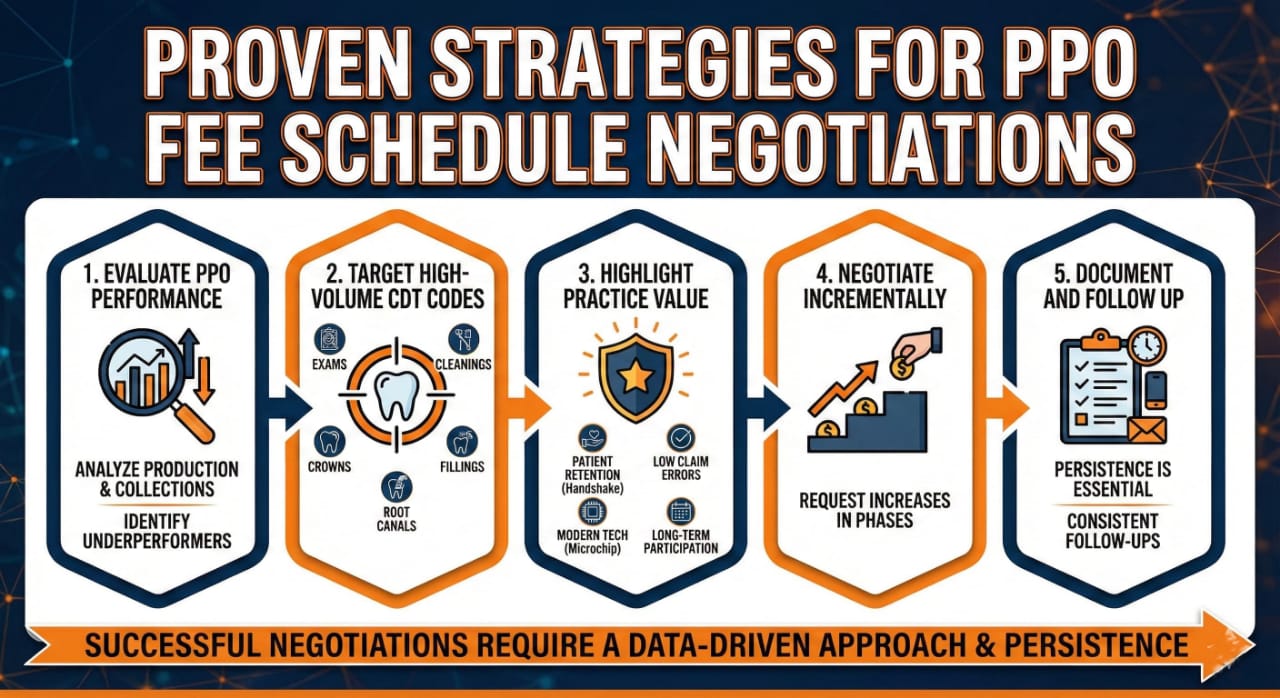
Successful PPO fee schedule negotiations require a data-driven approach:
- Evaluate PPO Performance
Analyze production and collections by insurance plan to identify underperforming PPOs.
- Target High-Volume CDT Codes
Focus negotiations on procedures such as exams, cleanings, crowns, fillings, and root canals.
- Highlight Practice Value
Showcase patient retention, low claim error rates, modern technology, and long-term network participation.
- Negotiate Incrementally
Request increases in phases rather than attempting to renegotiate every code at once.
- Document and Follow Up
Persistence is essential in PPO fee schedule negotiations—many approvals require consistent follow-ups.
Common Mistakes to Avoid in PPO Fee Schedule Negotiations
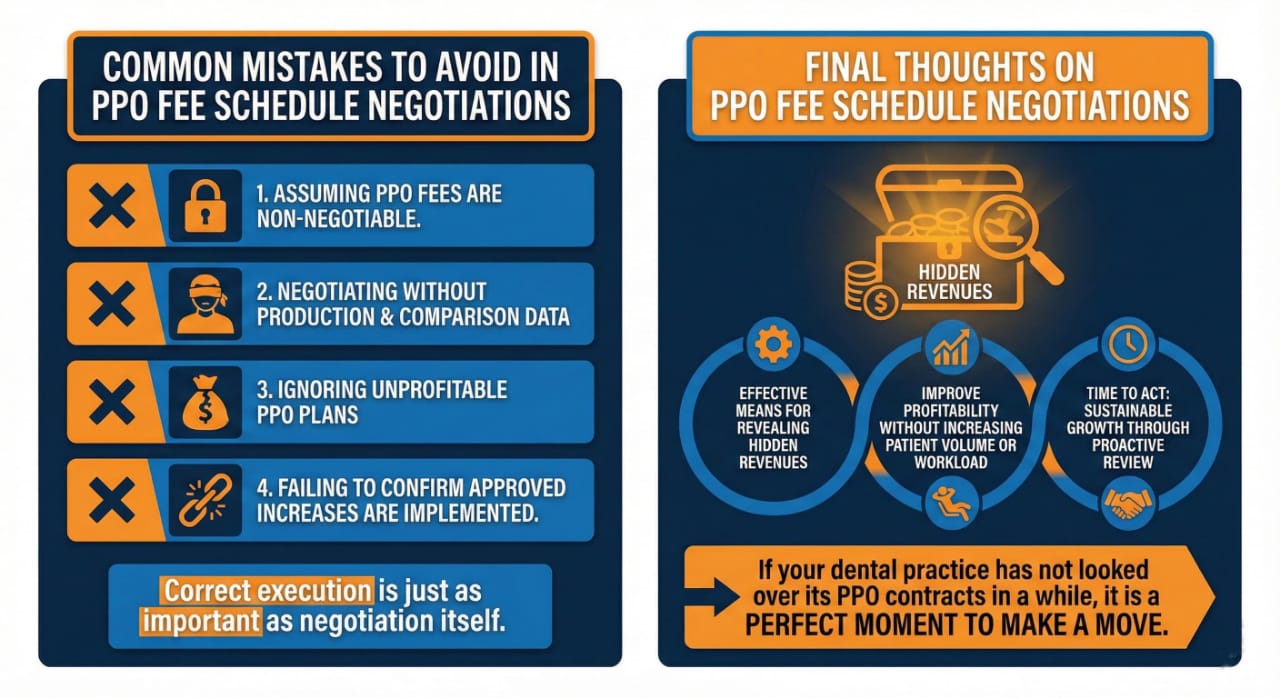
Avoid these errors that reduce negotiation success:
- Assuming PPO fees are non-negotiable
- Negotiating without production and fee comparison data
- Ignoring unprofitable PPO plans
- Failing to confirm that approved increases are implemented
Correct execution is just as important as negotiation itself.
Final Thoughts on PPO Fee Schedule Negotiations
PPO fee schedule negotiations are an effective means for dental practices to reveal hidden revenues. By using the right analysis, strategy, and follow, up, the practices can make their profitability so much better that the patient volume and the staff workload can remain unchanged.
If your dental practice has not looked over its PPO contracts in a while, it is a perfect moment to make a move.
Frequently Asked Questions (FAQs)
Q1: What are PPO fee schedule negotiations?
They are requests to insurance companies for higher reimbursement rates on PPO dental procedures.
Q2: Are PPO fee schedules negotiable?
Yes. Most carriers, in general, permit negotiations, notably if the data and the time chosen are correct.
Q3: How frequently should negotiations take place?
Negotiations should be held every 2, 3 years or when there is a substantial increase in operational costs.
Q4: What kind of procedures should be prioritized?
The focus should be on the high, volume procedures such as exams, cleanings, crowns, and fillings.
Q5: Will negotiating PPO fees affect patients?
Typically no; most patients are unaware of changes.
Q6: Should practices handle negotiations in-house?
Experts usually achieve better results than in-house attempts.